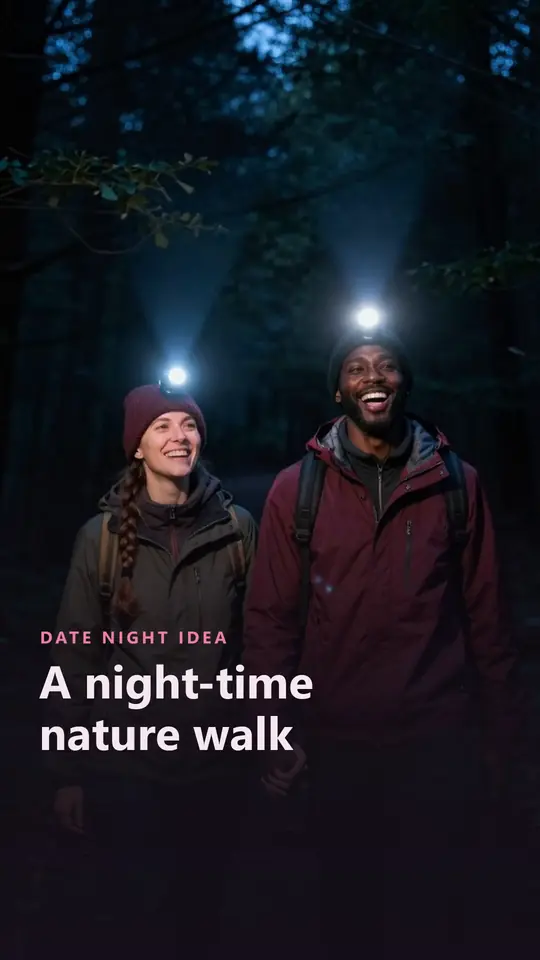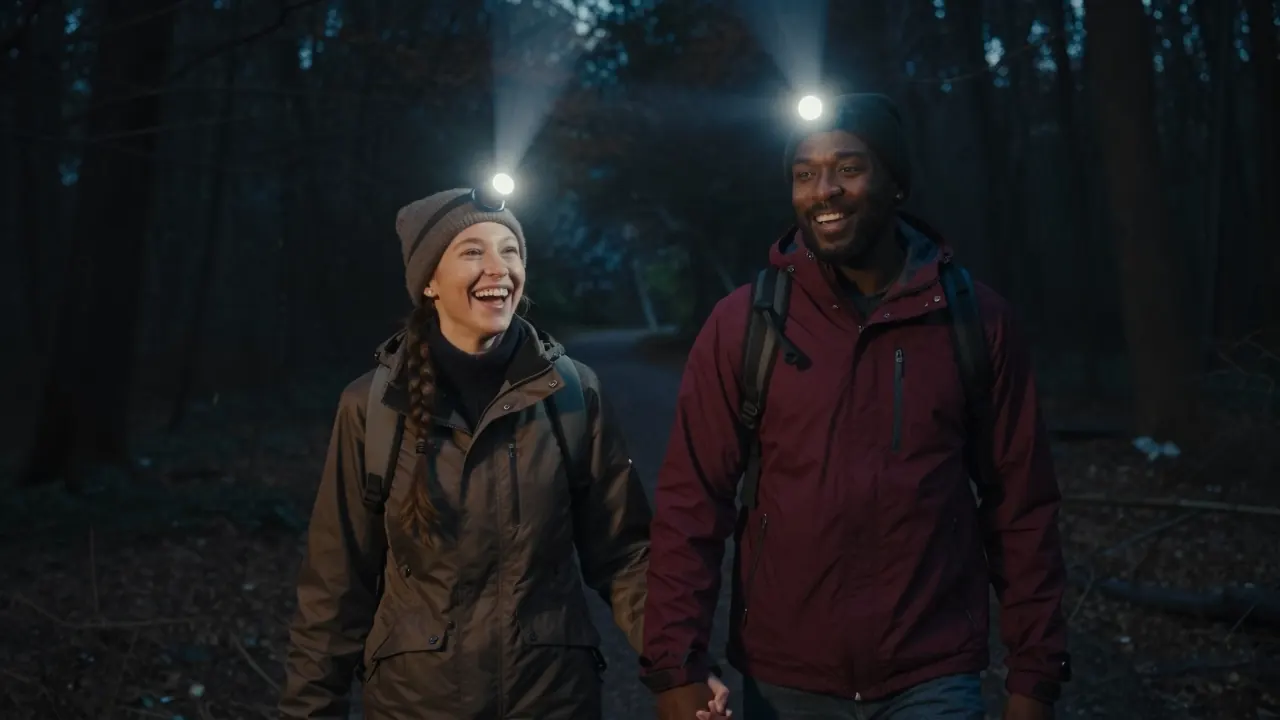
A path you’ve walked a hundred times in daylight becomes somewhere else entirely after dark. Sounds carry, eyes adjust, and the two of you are the only people in the world. It’s a little adventurous, a little romantic, and costs nothing at all.
Choose your route
Pick a path you already know well in daylight, so you won’t get lost. A woodland trail, a riverside path, a park or a stretch of coast all work. Keep it short: an hour or so is plenty. Check the sunset time, and if you’re on the coast, check the tides.
What to bring
- A head torch each, with spare batteries. A red light setting helps your night vision.
- Warm layers and waterproofs. It gets colder than you expect after dark.
- Sturdy shoes.
- A flask of something hot, and a snack.
- A charged phone, and tell someone where you’re going.
What to look and listen for
Every so often, stop and turn your torches off. Let your eyes adjust and listen: owls, foxes, the wind in the trees, the sea. On a clear night, look up. In late summer, some coastlines and lakes even glow with bioluminescence.
Stay safe
Stick to paths, walk together, and turn back if the weather changes. Avoid cliff edges and fast water in the dark.
Back home
Come in from the cold, swap muddy boots for something comfortable, and warm up together. Wrapped up on the sofa, with cold noses and warm drinks, is a perfect place for a game of Trust & Tease.